English
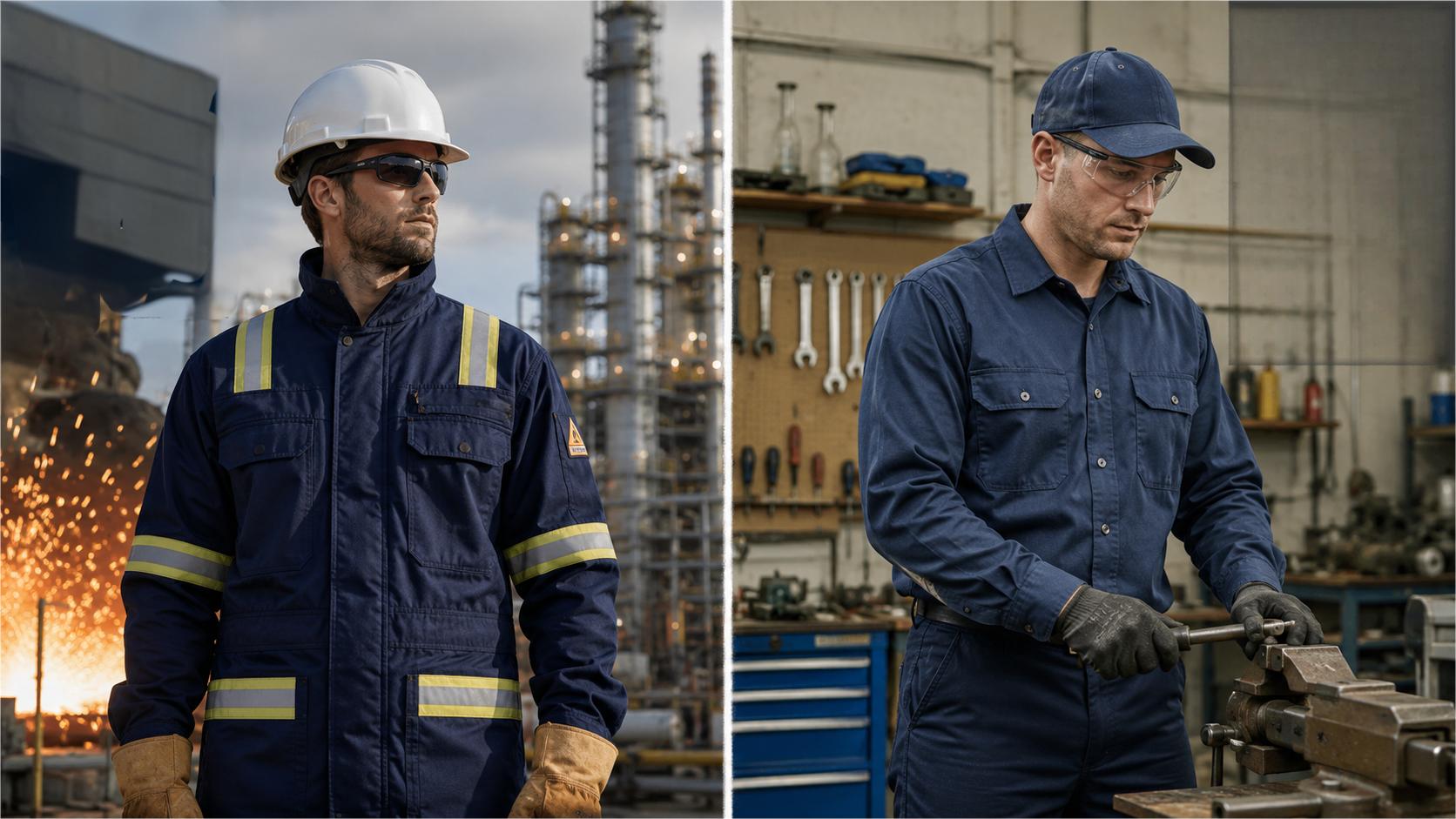
Choosing the right workwear is crucial for workplace safety, especially in high-risk industries such as oil refineries, welding workshops, or chemical plants. While both flame-retardant clothing and regular workwear can serve as uniforms, their materials, designs, and protective functions differ significantly. This guide will explain these differences to help safety managers, procurement teams, and workers make the right choices.
Flame-Resistance Clothing
Flame-retardant (FR) clothing is specially designed to resist flames, self-extinguish rapidly, and minimize burns upon exposure to flames, electric arcs, or heat hazards. It reduces the risk of severe burns or more serious injuries.
General Work Clothing
General work clothing—including cotton uniforms, polyester jackets, and traditional coveralls—is designed for durability, comfort, and general workplace functionality. This clothing does not have flame-retardant properties and is intended for low-risk environments.
FR Clothing
Inherently FR Fibers: Aramid (e.g., Kevlar®), modacrylic, or UHMWPE fibers that are naturally flame-resistant and retain protection over the garment’s lifetime.
Chemically Treated Fibers: Cotton or cotton-polyester blends infused with flame-retardant chemicals that prevent combustion.
Key Safety Feature: Fibers do not melt, drip, or stick to the skin, minimizing burn severity.
General Work Clothing
Materials: Pure cotton, polyester, nylon, or blends without flame-retardant treatment.
Risks: Synthetic fibers can melt and drip when ignited, causing secondary burns; cotton burns quickly and may smolder, increasing injury risk.
FR Clothing
Global Standards:
China: GB 8965.1-2020
Europe: EN ISO 11612
North America: NFPA 2112
Performance Metrics:
Self-extinguishing in ≤ 2 seconds
Char length ≤ 10 cm (no melting/dripping)
Heat transmission resistance to protect skin
General Work Clothing
Complies only with basic textile safety standards (e.g., GB 18401, OEKO-TEX), offering no flame protection.
Rapid ignition and melting significantly increase workplace injury risk in fire-prone areas.
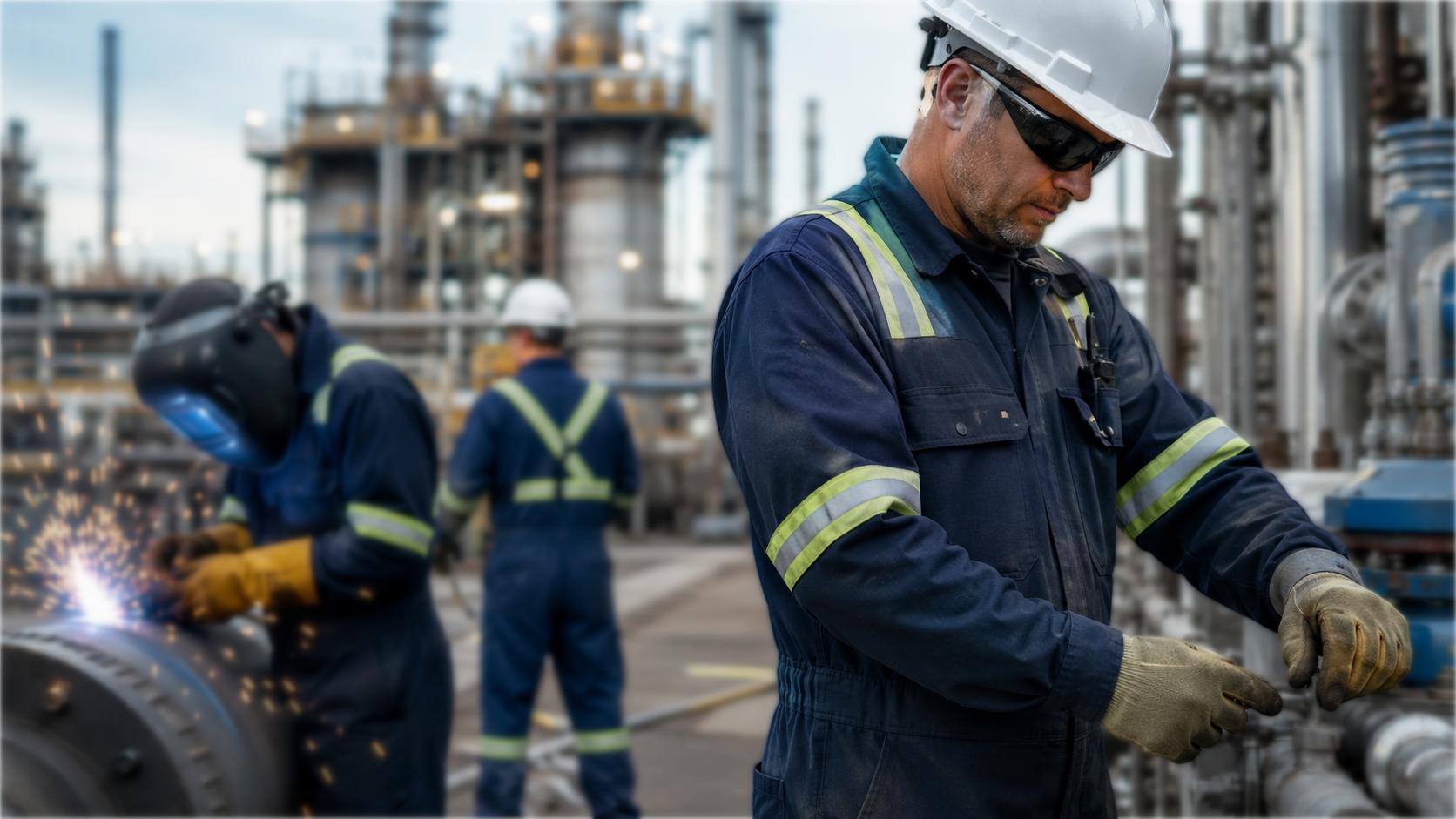
FR Clothing is essential for high-risk environments:
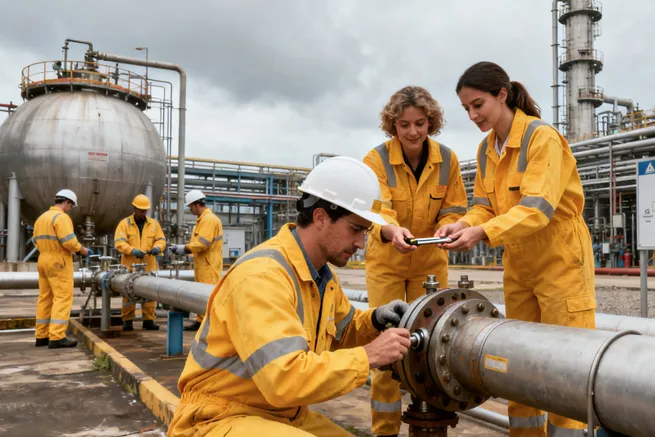
Petrochemical refineries, oil rigs, and gas stations
Welding, cutting, and metal fabrication
Chemical and pharmaceutical factories
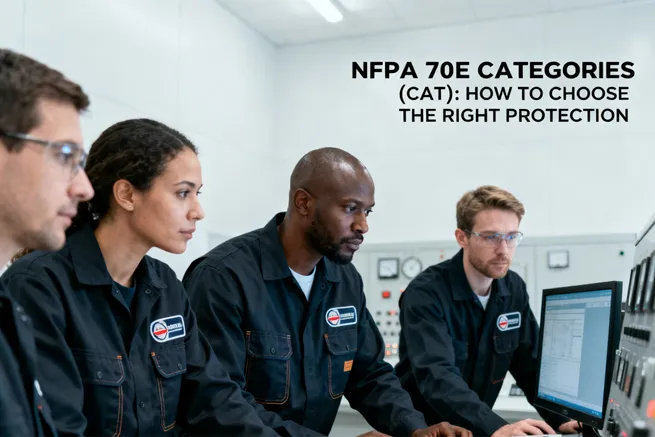
Electrical maintenance and power generation (arc flash risks)
Automotive paint shops and engine assembly lines
General Workwear is suitable for low-risk, non-flammable workplaces:
Administrative offices or workshops
Light manufacturing with no heat exposure
Logistics warehouses without flammable materials
Retail, catering, or general service industries
FR Clothing
Wash Durability: Inherently FR fibers maintain protection for the garment’s life; chemically treated FR garments retain protection for 50+ washes.
Maintenance: Wash with neutral detergent; avoid bleach, fabric softeners, or high-temperature drying.
Longevity: Industrial-grade construction with thicker fabrics, reinforced seams, and resistance to abrasion or chemicals.
General Workwear
Wash Durability: No specialized maintenance; synthetic blends may fade or pill.
Longevity: Less durable in harsh industrial environments; prone to tearing or degradation with heavy use.
FR Clothing
Higher initial cost due to specialized materials and production processes.
Long-term value: Reduces injury risk, liability exposure, and replacement frequency, making it cost-effective in high-risk workplaces.
Normal Workwear
Lower upfront cost, but lacks fire protection.
Hidden risks: Potentially costly accidents, medical expenses, and regulatory penalties in hazardous environments.
The fundamental difference between FR clothing and normal workwear lies in protection. FR garments are engineered to defend against fire and thermal hazards, whereas standard workwear focuses solely on comfort and utility. In hazardous industries, FR clothing is not optional—it is a vital investment in worker safety.
DOMEX focuses on the design and innovation of special protective clothing, and is deeply involved in core protective technologies such as flame resistance and anti-static properties. We provide safe and reliable professional protective solutions for the industrial, power, petroleum and chemical industries, and are committed to becoming a globally trusted protective brand.