English

In industries such as oil & gas, petrochemical processing, and chemical manufacturing, flash fire remains one of the most serious workplace hazards. These events occur in seconds, but the thermal exposure can cause severe injury if workers are not properly protected.
To address this risk, the NFPA 2112 standard defines the minimum performance requirements for flame resistant garments designed to protect industrial workers from short-duration thermal exposure.
This article explains what NFPA 2112 means in practice, how FR garments are tested, and what buyers should look for when selecting certified protective clothing.
NFPA 2112 is a performance standard for flame resistant clothing used in industrial flash fire environments.
It is widely applied in:
Oil and gas operations
Refinery maintenance
Chemical plants
Fuel transportation and storage facilities
The goal is simple:
Reduce burn injury severity during short but intense flash fire exposure.
It is important to note that NFPA 2112 is not a design guideline alone. It is a full system standard, covering fabric, garment construction, testing, and labeling requirements.
To meet NFPA 2112, materials must pass a series of thermal and flammability tests.
Fabrics are tested under ASTM D6413 conditions:
Afterflame time ≤ 2 seconds
Char length ≤ 100 mm
No melting or dripping
This ensures the fabric self-extinguishes quickly once the ignition source is removed.
A key evaluation is Thermal Protective Performance (TPP):
Minimum requirement:
≥ 3.0 cal/cm² (direct contact condition)
≥ 6.0 cal/cm² (air gap condition)
This measures how much heat energy the fabric can block before causing skin damage.
Fabric must also remain stable under high temperature exposure (around 260°C conditions):
No ignition
No melting
No structural separation
Shrinkage must remain within controlled limits
This ensures the garment remains intact during extreme exposure.
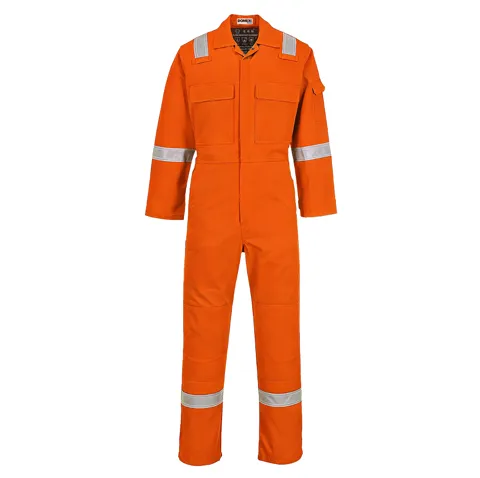
NFPA 2112 is not only about fabric—it also evaluates the full garment system.
FR garments must ensure:
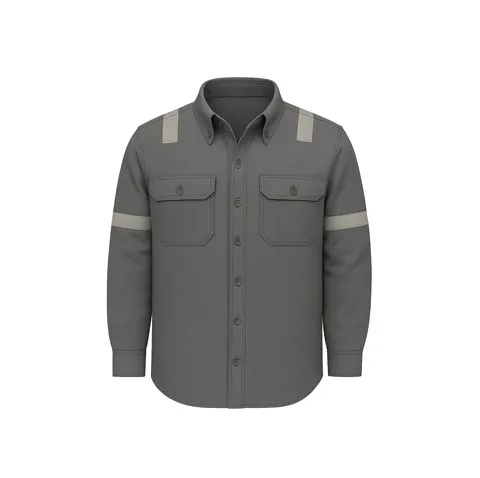
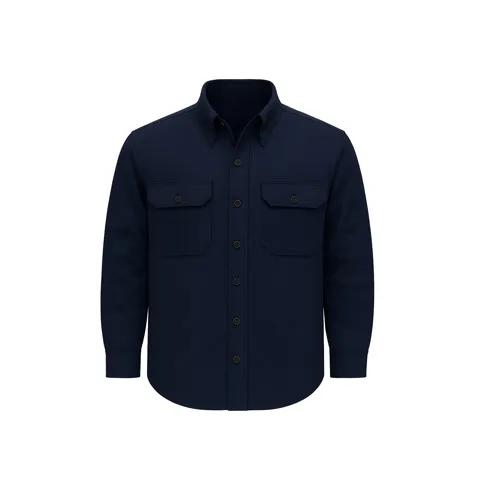
Long sleeves
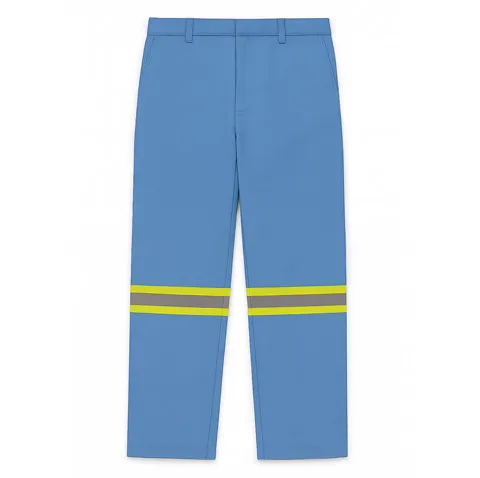
Full-length trousers
Continuous coverage during movement
Exposed skin areas significantly increase burn risk and are not acceptable in certified systems.
All structural seams must maintain integrity during exposure and mechanical stress.
Key expectations:
Reinforced stitching in high-stress zones
No seam separation during testing
Stable performance after washing cycles
Closures such as:
Zippers
Buttons
Snap fasteners
must be tested under heat exposure conditions to ensure:
No melting or dripping
Functional integrity after exposure
No added injury risk to the wearer
NFPA 2112 does not strictly mandate pocket flaps, but design must avoid:
Heat accumulation zones
Open structures that trap molten particles
Weak points in garment layering
One of the most overlooked aspects in procurement is that every component matters.
Outer fabric must meet full FR requirements
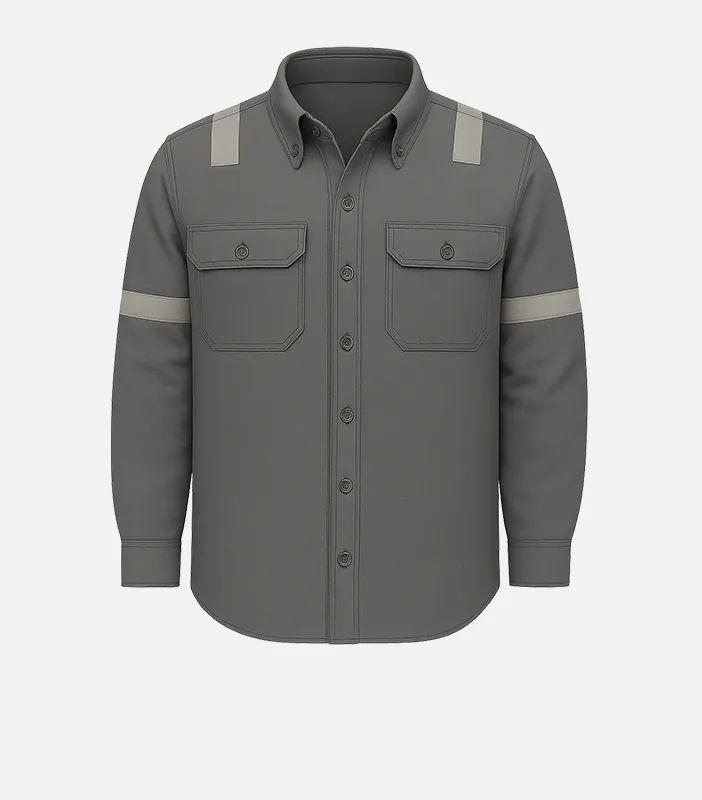
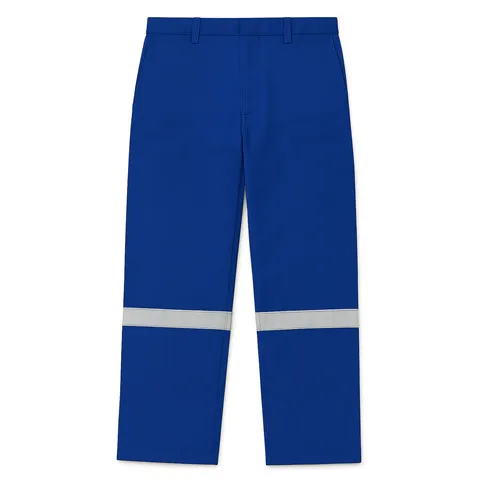
Any visible contrast fabric must be equally certified
Hidden layers must not introduce flammable materials
Sewing thread must resist heat without melting
Elastic materials must be fully covered
Metal components must not contact skin directly
Limited in size and quantity
Must not introduce melting risk materials (such as PVC)
Must remain legible after washing cycles
NFPA 2112 requires full garment testing using a thermal manikin.
Test conditions typically include:
Exposure: ~3 seconds
Heat flux: ~84 kW/m²
Multiple test repetitions
Evaluation result:
Predicted second- and third-degree burn area must be ≤ 50%
This is one of the most critical pass/fail indicators for certification.
A common misunderstanding in PPE sourcing is confusing:
Fabric test reports
vs
Certified finished garments
NFPA 2112 certification applies to the complete garment system, not only the fabric.
A valid certified product must include:
Approved material system
Verified garment construction
Controlled production process
Traceable certification documentation
Certified NFPA 2112 garments must include permanent labeling with:
Standard reference (NFPA 2112:2023)
Manufacturer identification
Size information
Care instructions
Batch or traceability code
Certification statement
Improper labeling can invalidate compliance even if the fabric passes testing.
NFPA 2112 focuses specifically on flash fire protection, but is often used alongside:
EN ISO 11612 (heat and flame protection)
EN 1149-5 (anti-static protection)
ASTM F1506 (arc-rated fabric system)
In many industrial projects, multi-standard compliance is required depending on job risk level.
When sourcing NFPA 2112 compliant FR workwear, consider:
Fabric certification authenticity
Garment-level certification scope
Consistency between samples and mass production
Component-level compliance (zippers, thread, trims)
Post-wash performance stability
For industrial procurement, consistency is often more important than single test results.
NFPA 2112 sets a complete framework for industrial flash fire protection, covering fabric performance, garment structure, and full system testing.
For high-risk industries, compliance is not optional—it is a fundamental requirement for worker safety.
Proper understanding of this standard helps safety managers and procurement teams select reliable flame resistant workwear that performs consistently in real industrial environments.