English
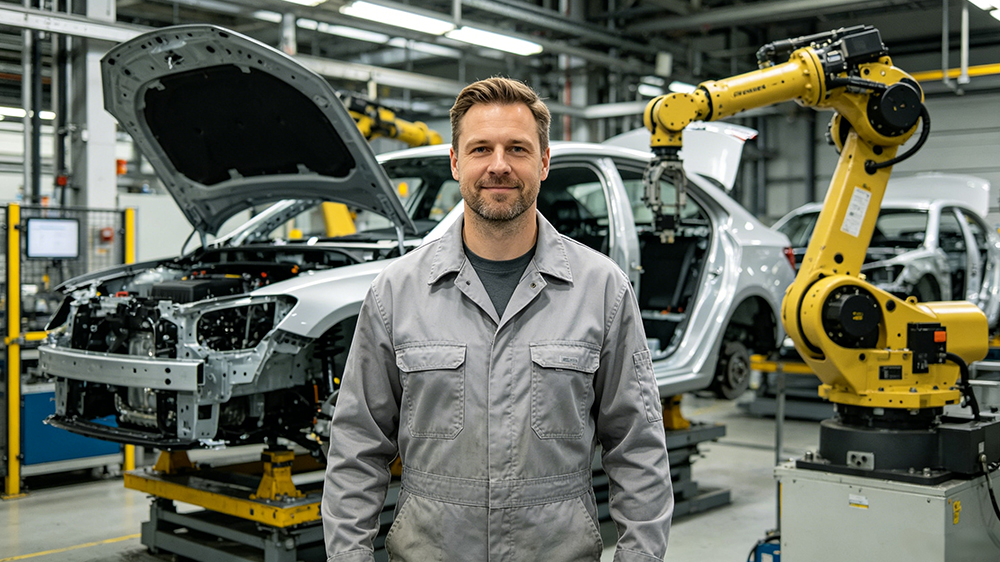
Modern automotive manufacturing facilities are highly specialized environments where precision assembly, welding, stamping, painting, and electronic component installation often take place under the same roof. Each production area presents different challenges, which means workwear must do more than simply provide a professional appearance.
For automotive manufacturers, the right industrial workwear helps protect employees, reduce damage to sensitive components, improve workplace organization, and support operational efficiency throughout the production process.
This guide explores the key requirements for automotive factory workwear and offers practical recommendations for selecting garments that can withstand the demands of modern vehicle production.
Automotive factories combine a wide range of production processes, each with unique safety and operational requirements.
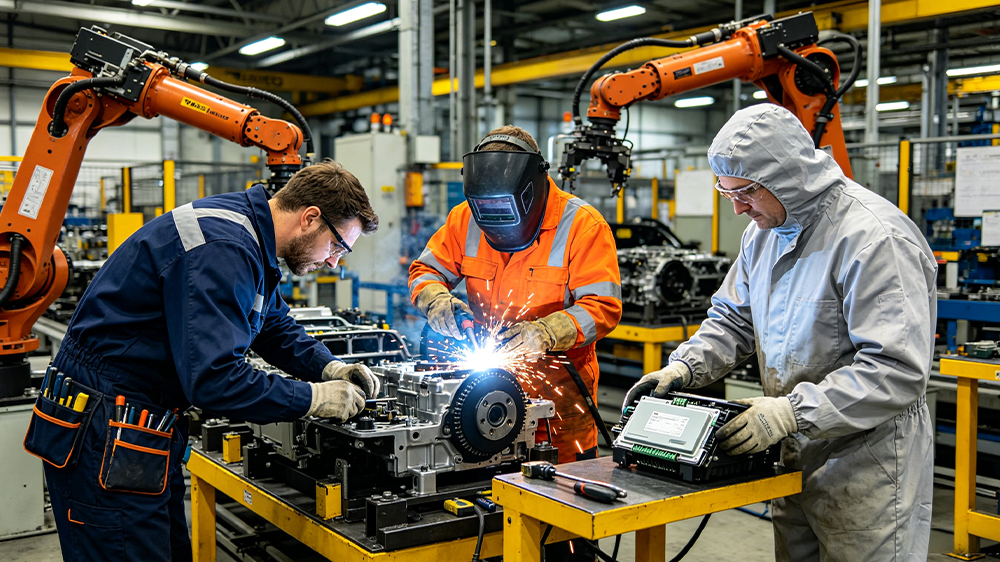
Assembly lines require flexibility and comfort for workers who perform repetitive movements throughout the day. Welding areas introduce heat, sparks, and metal splatter. Painting workshops demand clean environments with controlled contamination levels. Electronics production areas often require protection against static discharge that could damage sensitive components.
Because of these varied conditions, a single workwear solution may not be suitable for every department.
As vehicles become increasingly dependent on electronic systems, protecting sensitive components has become more important than ever.
Control modules, sensors, wiring systems, and electronic assemblies can be affected by static electricity generated through everyday movement. Even a small electrostatic discharge may lead to component failure, product defects, or costly rework.
For this reason, many automotive facilities choose garments made with conductive fibers or anti-static fabric constructions designed to help dissipate static charges safely during daily operations.
Standards such as EN 1149 are commonly referenced when evaluating electrostatic performance in industrial workwear.
Automotive manufacturing involves constant interaction with tools, machinery, metal components, and workstations. Clothing is exposed to abrasion, oil contamination, repetitive movement, and frequent laundering.
To improve service life, many factories prefer garments featuring:
Durable twill fabrics
Reinforced stitching
Strengthened knees and elbows
Abrasion-resistant construction
Easy-care fabric finishes
Workwear that maintains its appearance and performance over time can help reduce replacement costs and support a more professional workplace image.
Workers often spend long shifts standing, walking, lifting, and performing repetitive tasks. Uncomfortable clothing can contribute to fatigue and reduce efficiency.
Modern industrial garments increasingly focus on comfort features such as:
Breathable fabric construction
Moisture management properties
Ergonomic pattern design
Flexible movement zones
Lightweight materials where appropriate
A balance between protection and comfort helps improve worker acceptance and daily wear compliance.
Assembly Areas
Assembly line personnel generally benefit from lightweight, durable garments with practical storage pockets and unrestricted mobility.
Welding Operations
Welding environments typically require additional protection against sparks and heat exposure. Flame-resistant materials, covered closures, and reinforced construction are commonly used in these areas.
Paint Shops
Cleanliness is critical in painting operations. Low-lint fabrics and designs that help reduce contamination are often preferred to maintain coating quality.
Electronic Component Production
Electronic workshops often require enhanced anti-static performance. Garments should minimize static generation while avoiding accessories that could scratch or damage sensitive components.
Stamping and Heavy Manufacturing
These environments place greater demands on garment durability due to contact with sharp edges, heavy equipment, and repetitive movement.
Many automotive manufacturers implement unified workwear programs to improve organization and visual identification.
Common practices include:
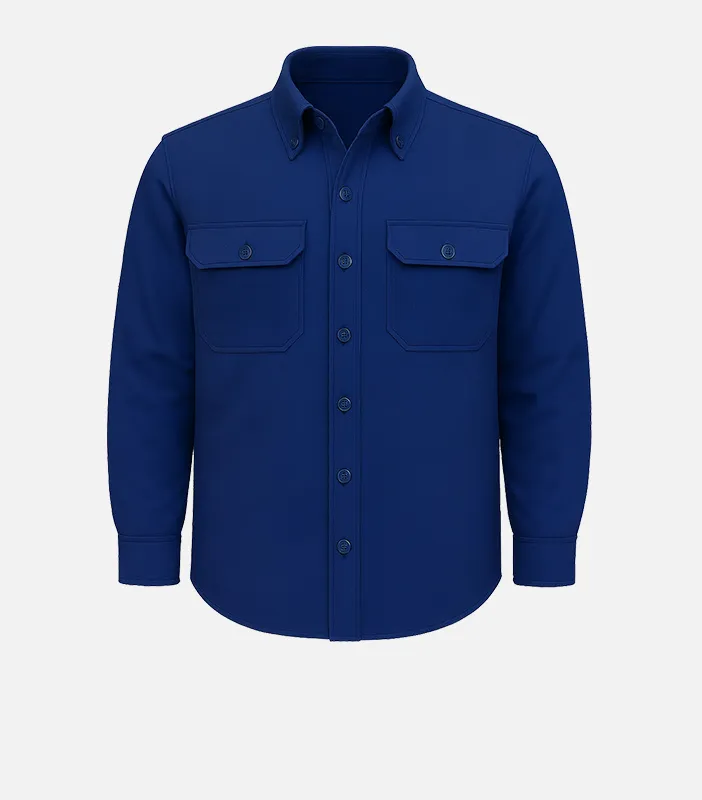
Different colors for different departments
Employee identification embroidery
Company logos
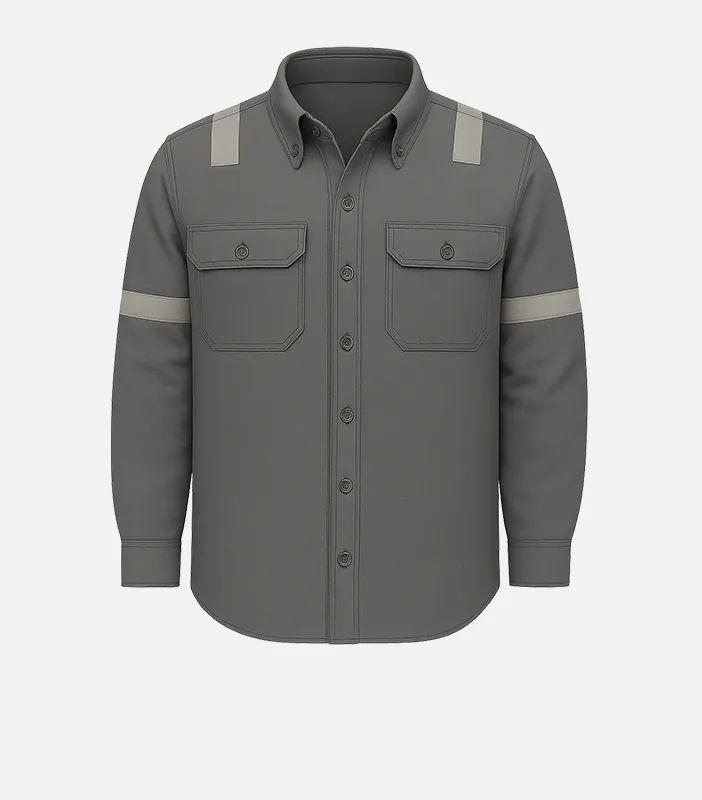
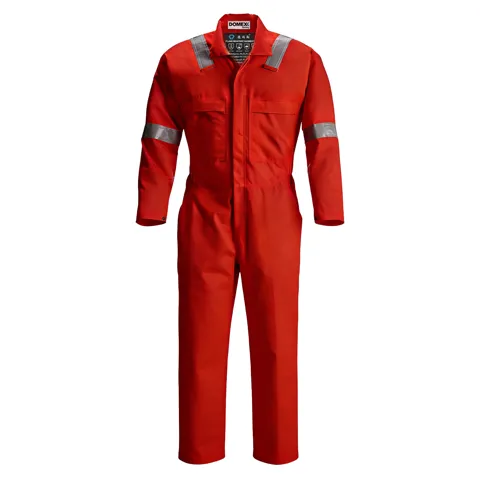
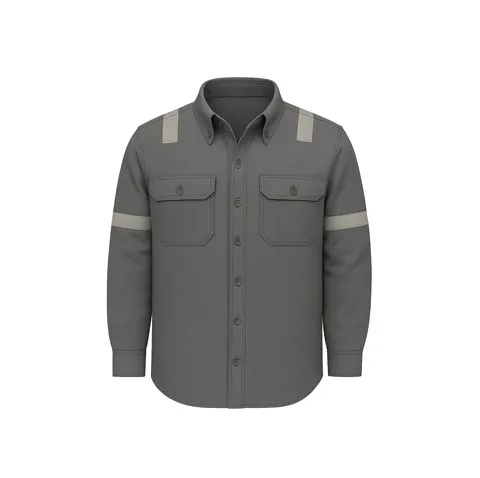
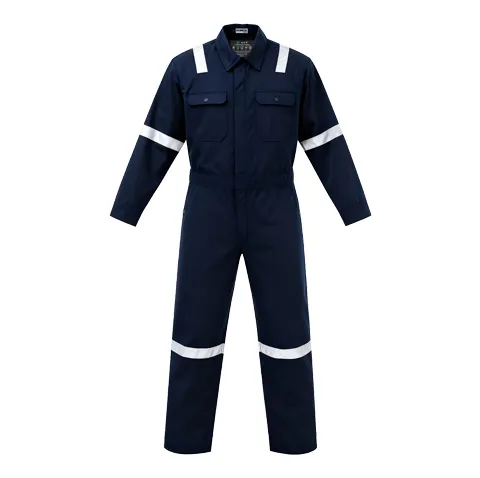
Reflective elements in large facilities
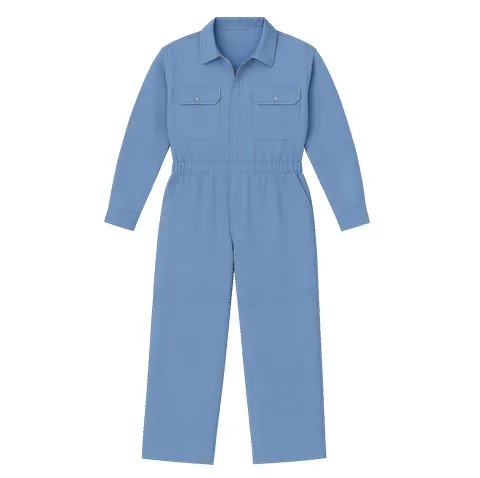
Standardized garment styles across production teams
These measures can improve management efficiency while maintaining a consistent corporate image.
When purchasing workwear for large manufacturing teams, buyers should look beyond unit price and evaluate long-term value.
Important considerations include:
Fabric quality and consistency
Anti-static performance
Durability testing
Wash life expectancy
Size availability
Supplier production capacity
Replacement and after-sales support
Conducting wear trials before large-scale procurement can help identify potential issues related to fit, comfort, or garment performance.
Automotive factory workwear should be selected according to actual production environments rather than relying on a one-size-fits-all approach. The most effective solutions combine anti-static protection, durability, comfort, and practical design features that support everyday operations.
As automotive manufacturing continues to evolve, well-designed industrial workwear remains an important investment in worker safety, production quality, and operational efficiency.
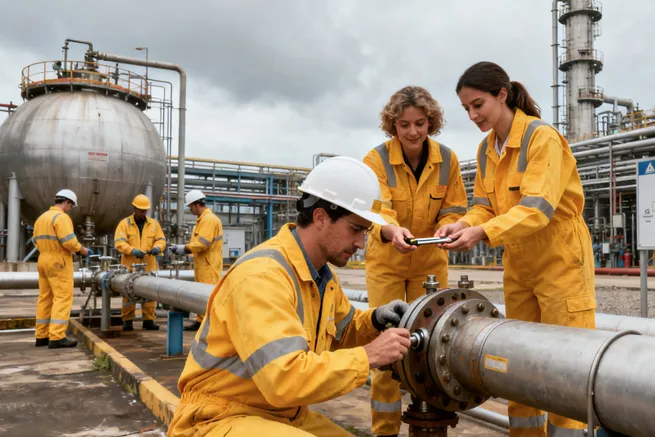
DOMEX focuses on the design and innovation of specialized protective apparel, with deep expertise in core safety technologies such as flame resistance and anti-static protection. We provide safe and reliable professional protective solutions for the industrial, electrical, oil, and chemical sectors, and are committed to becoming a globally trusted protective brand.