English
Flame-resistant and fire-retardant fabrics are often used interchangeably, but in industrial safety, they are not the same. Understanding the key differences is essential for selecting the right protective workwear and ensuring real protection in high-risk environments.
This guide explains how these fabrics work and why the distinction matters for industrial PPE.
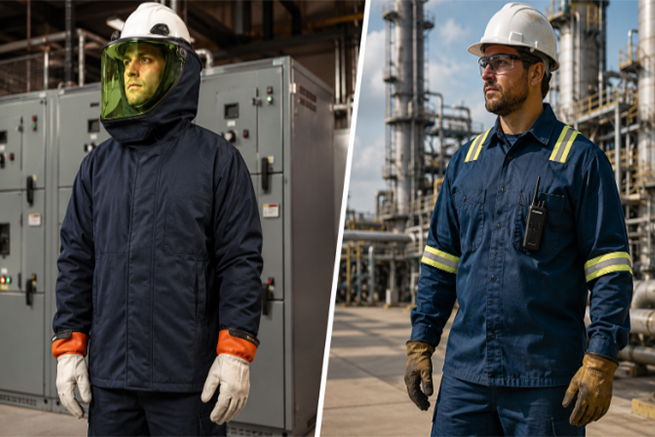
Flame-resistant (FR) fabrics are designed to resist ignition and self-extinguish once the heat or flame source is removed. They do not melt or drip, helping to reduce burn injuries during flash fires or thermal exposure.
FR protection can be achieved through:
Inherent flame-resistant fibers, where protection is built into the fiber
Durably treated fabrics, where flame resistance is engineered to last through industrial laundering
Certified flame-resistant fabrics are commonly required in oil & gas, electrical, and petrochemical industries.
Fire-retardant fabrics typically rely on surface chemical treatments to slow down flame spread. While they may delay ignition, their performance can be affected by repeated washing, improper care, or harsh industrial conditions.
These fabrics are often used in lower-risk applications where full industrial flame protection is not required.
Performance
Flame-resistant fabrics self-extinguish and limit heat transfer, while fire-retardant fabrics mainly slow burning.
Durability
FR fabrics are designed for long-term industrial use. Fire-retardant treatments may degrade over time if not properly maintained.
Industrial Safety Use
Most international safety standards specify flame-resistant fabrics for hazardous workplaces, not basic fire-retardant materials.
In high-risk environments, safety programs require predictable and repeatable protection. Flame-resistant fabrics provide consistent performance, helping companies protect workers and meet safety compliance requirements.
Choosing the correct fabric is not a marketing decision — it is a safety decision.
Flame-resistant and fire-retardant fabrics serve different purposes. For industrial PPE, certified flame-resistant fabrics offer a higher level of protection, durability, and reliability. Understanding this difference helps companies make informed choices and build safer workplaces.