English
Flame-resistant (FR) workwear is designed to protect workers in high-risk industrial environments—but that protection must last beyond the first wash. In real operations, FR garments are exposed to frequent, harsh industrial laundering. Without proper testing and design, washing can cause shrinkage, fabric degradation, and loss of performance.
This article explains ISO 15797, why it matters, and how industrial washing and shrinkage control impact the long-term safety and durability of FR workwear.
ISO 15797 is an international standard that defines test methods for industrial laundering of workwear. It simulates the washing, drying, and finishing processes used in commercial and industrial laundries.
Unlike domestic wash tests, ISO 15797 reflects:
High washing temperatures
Strong detergents
Mechanical stress
Repeated wash cycles
The goal is to evaluate whether garments maintain fit, integrity, and performance under real industrial conditions.
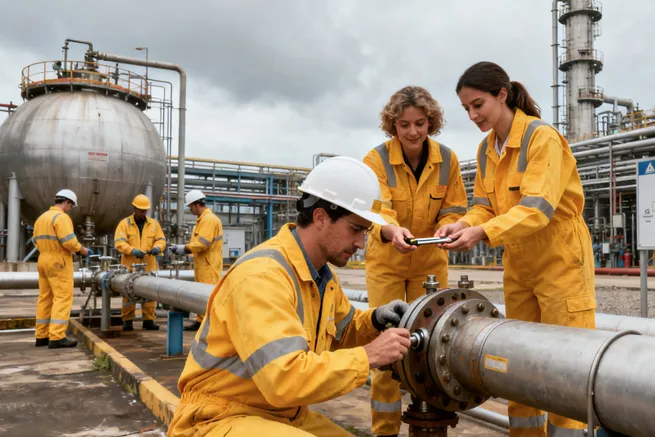
In many industries—oil & gas, utilities, manufacturing, and maintenance—FR workwear is washed dozens or even hundreds of times during its service life.
Without industrial wash testing:
Garments may shrink excessively
Protective coverage can be reduced
Seams and closures may fail
Comfort and compliance may decline
A poorly washed garment can expose skin and compromise flame protection, even if it was certified when new.
Shrinkage directly affects safety.
Excessive shrinkage can:
Shorten sleeves or pant legs
Reduce garment overlap and coverage
Restrict movement and comfort
FR garments tested under ISO 15797 help ensure dimensional stability, maintaining proper fit and coverage after repeated laundering.
Industrial washing can stress flame-resistant fibers. ISO 15797 testing helps verify that FR garments:
Retain fabric integrity
Maintain flame-resistant behavior
Continue to self-extinguish after washing
Do not degrade under industrial conditions
This is especially important for FR clothing used in arc flash or flash fire environments.
Domestic wash tests do not reflect real-world industrial use.
Domestic Washing | ISO 15797 Industrial Washing |
Mild detergents | Industrial-grade detergents |
Lower temperatures | High-temperature washing |
Light mechanical action | Heavy mechanical stress |
Limited cycles | Repeated, severe cycles |
ISO 15797 provides realistic and reliable durability validation.
For safety managers and procurement teams, ISO 15797 testing offers:
Confidence in long-term garment performance
Reduced replacement frequency
Improved compliance during audits
Lower total cost of ownership
It ensures FR workwear performs not just when new—but throughout its working life.
When evaluating FR workwear, ask:
Has the garment been tested to ISO 15797?
How many wash cycles were evaluated?
What is the measured shrinkage after washing?
Does the garment maintain fit and comfort?
These questions help distinguish industrial-grade PPE from consumer-level products.
ISO 15797 is not just a washing standard—it is a measure of real-world durability and safety. For flame-resistant workwear, industrial laundering performance and shrinkage control are essential to maintaining protection, fit, and worker confidence over time.
Choosing FR garments tested under ISO 15797 helps ensure that safety doesn’t disappear down the drain.